|
|
|
WELCOME TO THE NEW STEPPER MOTOR TURN TABLE PROJECT COMPLETED: 18/JUNE/2026
| ||||||
| THE PLAN
|
||||||
|
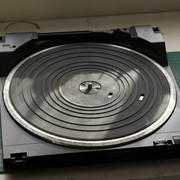
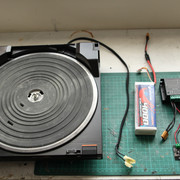
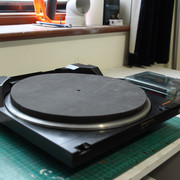
Being an esoteric kind of guy, rather than doing the sensible thing and building a box with a stepper motor in the middle, I thought it would be fun to instead buy an old LP record player from ebay and turn that into a turn table; my idea of fun may not be the same as most people's.
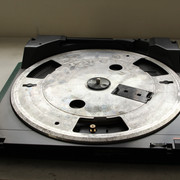
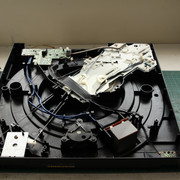
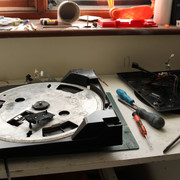
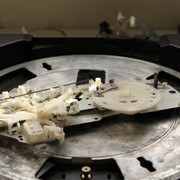
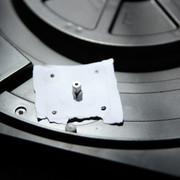
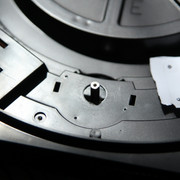
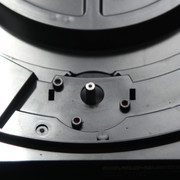
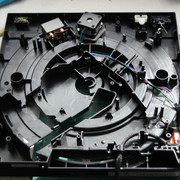
After locating a nice compact unit and buying it for the princely sum of ten quid, I started ripping it apart to remove all the parts I wouldn't need- which was most of them- and to assess how I would go about mounting the bits I would need, not an easy task as there is not much room inside an LP player it turns out.
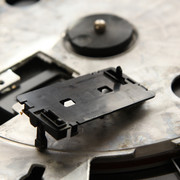
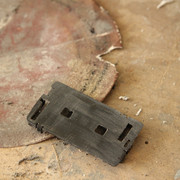
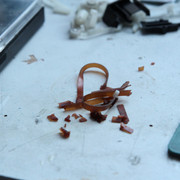
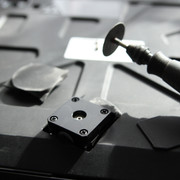
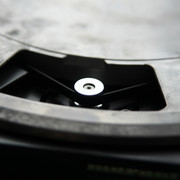
With all the guts removed I also took a moment to sand a part smooth ( something to do with detecting if an LP is on the platter ) and reinstalled it- there are enough holes in the platter already.
| ||||||
| THE MOTOR
|
||||||
|
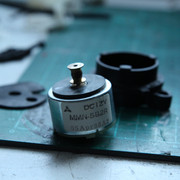
I spent a little while researching motor options and settled on compact little NEMA 40 that has more than enough power for my needs, made a paper template for the mounting holes and transferred those to the LP player and drilled them out.
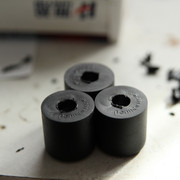
The motor was mounted in place with some rubber O-rings to reduce vibrations and a quick functionality test carried out to make sure it worked correctly ( not shown is the day of researching the wiring for stepper motor controllers and trying to translate Chinese text- that was a pain experience but a few old Reddit posts saved me further headaches ).
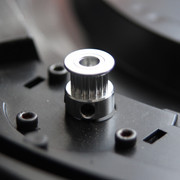
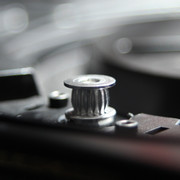
With that done I needed to trim down the motor shaft and grind a crown onto the gear I was using- I tried it without but the drive belt kept riding up the gear and over the top, with a nice curve added if stayed perfectly centered. I actually had to mount the gear to a piece of metal rod, then put that into the chuck on my pillar drill before using a small file to gradually add the crown- ghetto lathe ftw.
| ||||||
| FINALISING THE TABLE
|
||||||
|
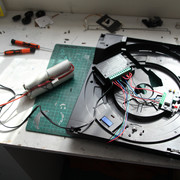
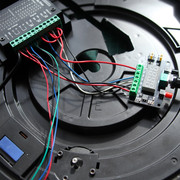
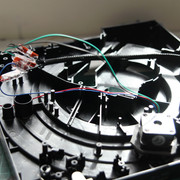
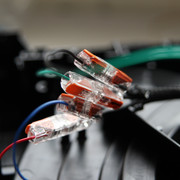
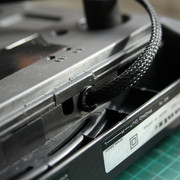
With the mechanism working I set about finalising the inards of the turn table, starting with the wiring. I opted to use Wago connectors to splice longer wires onto the stepper motor in order to have an external control box- no where near enough room inside the player so external gubbins was the best solution.
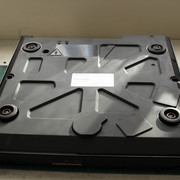
Some cable sleaving and a grommet tidied things up and I moved onto the feet; the originals were too short with the stepper motor hanging out the bottom of the casing, so longer ones sourced from ebay were used in their place after a little modification to install washers given that I couldn't use larger diameter screws.
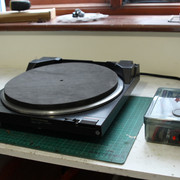
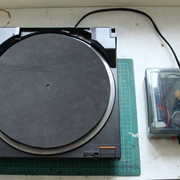
With all that done I could assemble the player for the last time, it was actually starting to look like something rather than a pile of bits.
| ||||||
| THE CONTROL BOX
|
||||||
|
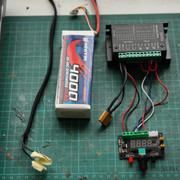
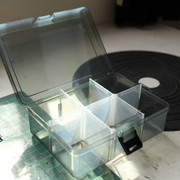
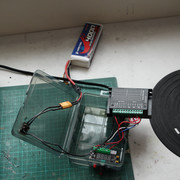
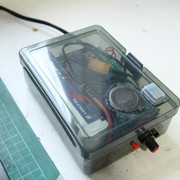
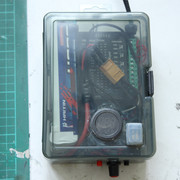
Since there was no room inside the player for the electronics I started looking for a suitable project box to house the 4S Lipo battery, Driver and Controller- turns out project boxes that size don't really exist or cost a small fortune if they do.
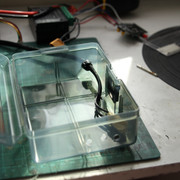
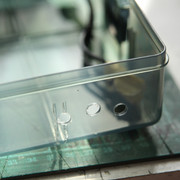
Instead, I picked up a still not-cheap organiser box ( nine quid! ) that fit the bill and started drilling holes in it for the various components to poke through.
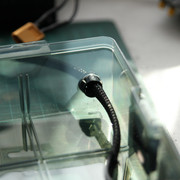
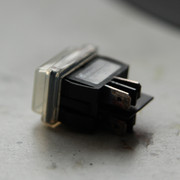
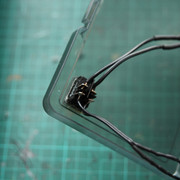
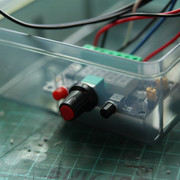
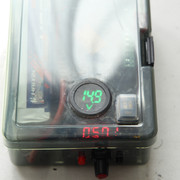
One for the sleaved cable ( with grommet ), three for the controller... controls, and a couple for the power switch ( saved from an old carpet cleaner no less ) and a voltmeter display in order to monitor the Lipo voltage- the display only turns on when the switch is flipped to connect power, ideal.
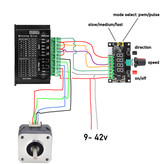
I've included a wiring diagram just in case it's useful to anyone else- if you try a google search most results only show wiring with an arduino or similar controller, not the cheap basic controller that can be found for cheap all over the web.
| ||||||
| FINAL TOUCHES
|
||||||
|
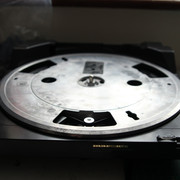
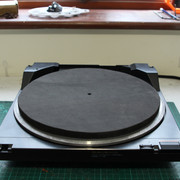
Everything wired up and working, so onto the final touches. I couldn't cut the spindle shorter for obvious reasons, so I needed to add a thick sheet of foam to the turn table platter in order to create a smooth, flat surface for items to sit on without being tilted to one side.
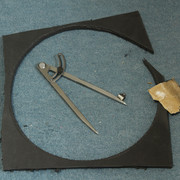
10mm EPA foam, a giant compass, some scissors and a bit of sandpaper did the job and a new foam slip matt was created, looks nice and neat on the platter and spins evenly too- top speed is roughly 7.5 RPM, doesn't sound fast but that's one revolution every eight seconds, plenty fast enough for photography or video making- minimum speed is unknown, very very slow being the answer there, ideal for time lapse work.
| ||||||